Bacon Toss Challenge
Reviews
Bacon Toss Challenge strips arcade tossing down to its essentials: one tap to drop, one to launch. The lack of time pressure encourages patience, and the gradual difficulty gives players a reason to keep refining their accuracy. It suits anyone who enjoys precision-based casual games and short play sessions. The main limitation is variety, as the core loop stays the same, but high score chasing and unlockable challenges add replay value.
Description
The Two-Tap Toss
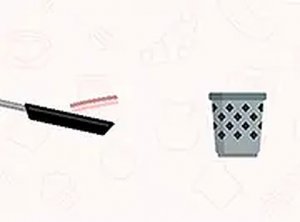
Bacon Toss Challenge reduces its entire control scheme to two taps. The first tap releases a slice of bacon hanging above a frying pan. The slice falls, lands on the pan, and waits. The second tap launches it toward a bin. That is the full interaction: drop, then launch. No dragging, no swiping, no multi-button combos. The simplicity is deliberate, because every bit of difficulty comes from when you tap, not how many options you have.
Timing Over Speed
The bin sits at a fixed distance, but the bacon does not travel on a fixed arc. Your launch timing determines the trajectory. Tap too early and the slice falls short; tap too late and it overshoots. The game rewards players who judge distance and wait for the right moment rather than mashing the screen. Because there is no time limit shown, patience becomes a skill. Consistency matters more than rushing, and the highest scores come from repeating the same careful rhythm.
Built for Short Sessions
Each attempt lasts only a few seconds. That makes Bacon Toss Challenge well suited to quick breaks, waiting rooms, or any moment when you want a focused activity without a long commitment. The minimalistic design keeps the screen clean so your attention stays on the pan, the bacon, and the bin. Full-screen mode is available if you want fewer distractions. Clear feedback after each toss tells you whether you were early, late, or on target, which helps you adjust without guessing.
Progression and Replay
High score challenges encourage replay, and the game offers gradual difficulty as you improve. New challenges may become available as you reach higher scores, giving you a reason to keep practicing beyond a single good run. The difficulty curve is gentle enough for newcomers but still offers a satisfying challenge for players who want to refine their accuracy. There are no complex systems to learn, no inventory, and no story. The appeal is purely in getting better at one precise action.










Editorial Notes