Cargo Arrangement Puzzle Game
Reviews
Cargo Arrangement Puzzle Game keeps its scope tight: fit blocks into a loading area before the clock runs out. The strength is that the timer creates urgency without turning the game into a reflex test, so observation and planning still decide the outcome. New shapes and layouts keep later levels from feeling repetitive. The main limitation is variety; there is no narrative or competitive layer, so players who need more than pure logic puzzles may lose interest.
Description
Loading Dock Logic
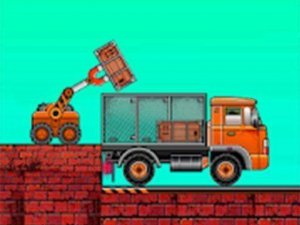
Cargo Arrangement Puzzle Game casts the player as a cargo loader. Each level hands you a set of blocks and a marked loading area. The task is to place every block inside that area without overlaps before the timer runs out. There is no combat, no inventory management, and no story to follow. The entire challenge lives in how you read a space and decide which piece goes where first.
Drag, Drop, and Reconsider
Controls are drag-and-drop with a mouse or a touch screen. Visual cues show where blocks can sit, and the game responds immediately to each placement, so a wrong move is visible right away. When a layout refuses to cooperate, restarting the level is always available. That reset is not a punishment; it is the main tool for testing a different sequence of placements. Because the timer keeps running during a level, the real skill is choosing an order that leaves room for awkward shapes instead of filling the easiest gaps first.
What Changes as You Progress
Later levels introduce new block shapes and new loading layouts. That shift matters more than a simple difficulty bump. A shape that fit neatly in an early grid can force a completely different approach once the area becomes irregular or the pieces become less uniform. Players who rely on one favorite placement pattern will eventually need to adapt. The time limit adds pressure, but the game keeps it gentle enough that observation and planning still matter more than raw speed.
Who This Suits
The 2D art is colorful and cheerful, and the rules are simple enough for children and adults to share. Sessions can be short or long, so the game works as a quick break or as an extended puzzle run. Anyone who enjoys brain teasers, logic puzzles, or the specific satisfaction of making irregular pieces fit will find the core loop familiar but demanding. Players who want narrative, competition, or fast action should look elsewhere.









Editorial Notes