Match Clear Puzzle Challenge
Reviews
Match Clear Puzzle Challenge sticks to a clean matching formula: connect identical cells, clear the board, and chain six or more for a special item. The lack of time limits on most levels makes it a relaxed fit for casual players and families. Difficulty comes from additional cell types and faster pacing, which raises the demand on pattern recognition. The game is easy to start but harder to master once the board gets crowded.
Description
Core Matching Mechanic
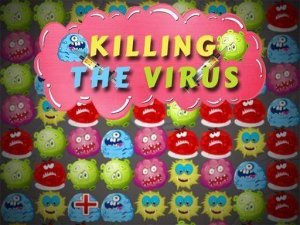
Match Clear Puzzle Challenge asks you to scan a grid of cells for groups that look exactly the same. Tap or click at least two identical cells to connect them. The connected group collapses and disappears, and you earn points. The board clears as you make more matches. The goal is to empty the screen by connecting as many groups as possible before the board fills with new cell types.
Chain Bonuses and Special Items
The defining twist is the chain bonus. Connect six or more identical cells in a single move and you create a special item. That item clears a larger area than a normal match, giving you breathing room when the board gets crowded. Deciding when to spend a large chain for a special item and when to clear smaller groups for steady points is the main strategic decision. Larger chains take more planning, but the payoff can rescue a tight board.
Progression and Difficulty
Early boards are forgiving: fewer cell types, more obvious clusters, and no time pressure on most levels. As you advance, new cell types appear, which makes identical groups harder to spot and reduces the number of easy matches. The game also speeds up, so quick recognition matters more. There are no time limits on most levels, so you can study the board before committing to a move.
Controls and Presentation
Controls are simple tap or click, and the feedback is immediate: cells connect, collapse, and vanish with a satisfying animation. The graphics are colorful and non-violent, with no frightening imagery, which keeps the game suitable for family play. Because there is no rush on most levels, the game works for short breaks or longer sessions. It is easy to learn but hard to master, especially once the board introduces more cell types and faster pacing.







Editorial Notes