Block Puzzle Challenge
Reviews
Block Puzzle Challenge sticks to the classic formula: rotate and position four-square shapes to complete horizontal lines. Its strengths are accessibility and a steady difficulty ramp—speed increases as you clear lines, but each move has no timer, so planning is possible. High-score tracking and offline play add practical value. The main limitation is familiarity; players seeking new mechanics may find it conventional.
Description
Core Block-Stacking Mechanic
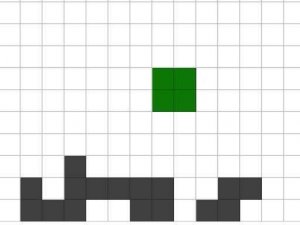
Block Puzzle Challenge uses the familiar premise of arranging four connected squares into solid horizontal lines. You control each falling shape with directional inputs, moving it left or right and rotating it to fit gaps. Completing a line removes it, awards points, and frees space. The run ends when blocks stack to the top of the field. There is no per-move timer, so every placement can be deliberate.
Speed and Difficulty Curve
As you clear more lines, the descent speed gradually increases. That shift changes the feel of the game: early rounds allow careful planning, while later rounds reward pattern recognition and quicker decisions. The challenge is not a sudden spike but a steady ramp that tests spatial reasoning under mild time pressure. Because the game ends only when the stack reaches the top, your own consistency sets the pace.
Relaxed, Accessible Design
The controls are simple and responsive, and the overall presentation uses colorful graphics with smooth animations. The family-friendly content and lack of complicated rules make it approachable for all ages. High-score tracking gives each session a clear goal: improve on your previous best. After loading, no internet connection is required, so the game works in situations where connectivity is limited.
Practical Play Tips
Leaving gaps for longer pieces can set up multi-line clears, which are more efficient than single-line removals. Keeping the stack low and even reduces the risk of tall, dangerous columns. Rotating pieces during descent helps find the best fit, and the next-piece preview lets you plan ahead. Regular practice builds the pattern recognition and reaction time that higher speeds demand.








Editorial Notes