Spot the Intruder Observation Challenge
Reviews
Spot the Intruder delivers exactly what its name promises: a straightforward observation puzzle where you scan rooms for characters that do not belong. The timer adds just enough urgency without feeling stressful, and the penalty for wrong clicks is fair. Level variety comes from different room layouts and object arrangements rather than gimmicks, which keeps the focus on genuine searching. The art is pleasant and easy to read, even on small screens. It is an ideal choice for players who want a calm but engaging puzzle experience that can be enjoyed in short bursts.
Description
Room-by-Room Investigation
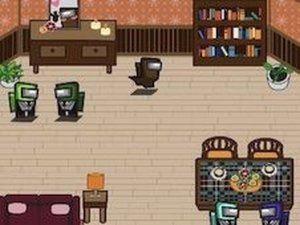
Each stage in Spot the Intruder places you inside a different indoor setting, such as a cluttered office, a busy kitchen, or a dim hallway. The goal is to identify which characters do not belong in that space. These intruders may be partially hidden behind furniture, peeking through vents, or standing near doors. The environments are drawn with enough detail to make scanning interesting but not overwhelming. As you progress, rooms become more crowded, and the intruders adopt better hiding spots, requiring more patience and focus.
Timed Decision Making
A countdown timer adds gentle pressure to each round. Clicking on the correct hidden figure adds bonus seconds, while tapping an innocent object subtracts time. This creates a risk-reward dynamic where hasty choices can backfire. Players must balance speed with accuracy to achieve high scores. The timer is generous enough for beginners but tight enough to challenge experienced puzzle fans. There is no penalty for taking a moment to think before clicking, making the experience accessible to all ages.
Visual Clarity and Feedback
The art style uses bright, clear colors and distinct shapes so that objects are easy to distinguish. When you click on a correct target, a satisfying visual cue confirms the find. Incorrect clicks produce a subtle shake, signaling the mistake without being punishing. The interface remains uncluttered, with only essential information displayed on screen. This design choice helps players stay immersed in the search rather than distracted by menus or pop-ups.
Progression and Variety
Levels are arranged in a linear sequence, with each new stage introducing a different room layout and a new set of objects to examine. Early levels teach the basic scanning technique, while later stages require more careful inspection of overlapping items. Some rooms include moving elements, such as a ceiling fan or a flickering light, which can briefly obscure hiding spots. This variety keeps the gameplay from feeling repetitive. Players can replay any completed level to improve their best time.
Cross-Platform Accessibility
The game runs directly in a web browser and adapts to screen size automatically. Controls work equally well with a mouse on a computer or with touch input on a phone or tablet. There is no installation required, and the game loads quickly even on slower connections. This makes it easy to pick up for a few minutes during a break or to play longer sessions at home. The responsive design ensures that buttons and clickable areas remain comfortable to tap on smaller screens.