Line Logic Puzzle Challenge
Reviews
Line Logic Puzzle Challenge strips the puzzle genre down to one decision: where to place a single line. That constraint is the game's strength, because it makes every level about reading angles and predicting bounces rather than managing complex systems. The minimal presentation and absence of time limits suit players who prefer thinking to reacting. The main limitation is inherent to the format: one attempt per level can feel unforgiving when a layout is hard to read, and the experience depends entirely on how varied the shape arrangements become.
Description
The One-Line Rule
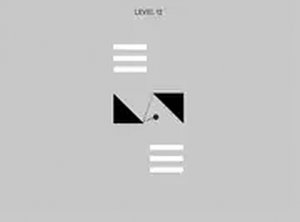
Every level in Line Logic Puzzle Challenge gives you a single line and a single launch. You tap or click, drag to set the line's position and angle, then release. A ball fires from that line, ricochets off surfaces, and removes shapes on contact. Clear all shapes and the level ends; miss even one and you must rethink your angle from the start. There are no mid-level retries, which turns each attempt into a small planning exercise rather than a reflex test.
Reading Angles Before You Draw
The line works like a ramp, and the ball's bounce mirrors its angle of impact. That rule is consistent enough to predict, but only if you trace the full path before releasing. Shape layouts vary: some levels cluster shapes tightly so a single bounce can sweep several at once, while others spread them across the screen and demand longer, more precise trajectories. Success comes from observation and spatial reasoning, not speed.
Minimal Presentation, Calm Pace
The visuals stay deliberately plain: a white background, simple geometric shapes, and a soft color palette. There is no background music, only subtle sound cues for hits and level completion. That restraint keeps attention on the puzzle itself. Because nothing is timed, you can sit with a layout, reconsider your angle, and try again without pressure.
Progression and Replay
Levels grow more complex over time, introducing new shape arrangements and spatial problems rather than just harder versions of the same setup. The game tracks your performance, so returning to earlier levels to find a cleaner or more efficient solution is part of the design. It runs in a web browser on desktop and mobile, needs no download, and supports both touch and mouse input, with a full-screen option available.










Editorial Notes