Tile Sweep Deduction
Classic Logic Puzzle Retro Strategy
Tile Sweep Deduction
182
Developer: Float Reckoners
Updated: 2026-10-01

Reviews

Tile Sweep Deduction sticks to one idea and executes it cleanly: numbers on revealed tiles count adjacent hidden elements, and you must use those counts to clear the board without guessing. Random board generation and adjustable grid size add replay value, while the interface stays out of the way. It is best suited to patient players who enjoy classic logic puzzles, though anyone seeking action or story will find it deliberately austere.

Description

Reading the Numbers

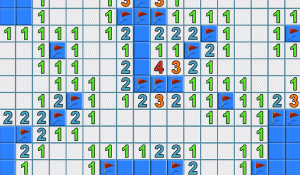
Every tile you uncover displays a digit. That digit is not decoration; it counts how many hidden elements sit in the eight surrounding tiles. Cross-referencing these numbers across the grid lets you mark safe zones and flag dangerous spots. The game never asks you to guess. Each new tile you reveal refines the picture, and a wrong click usually means you ignored a clue that was already on the board.

Fresh Boards, Adjustable Pressure

No two sessions start with the same arrangement. Hidden elements are placed randomly, so memorizing a layout won't help. You can adjust both the grid size and the density of hidden items. A small, sparse board is a gentle way to learn how the numbers relate to each other. Larger, denser grids demand longer chains of reasoning and more careful bookkeeping. The difficulty presets exist to change those two variables, not to alter the core rule.

Interface Without Distraction

The interface keeps tile states readable at a glance. Numbers use a legible font, and color coding plus subtle visual cues help you distinguish revealed, flagged, and untouched tiles. Controls respond to both mouse clicks and touch input, so the same puzzle works on a desktop or a phone. Nothing on screen competes with the grid itself.

How Experienced Players Work

Systematic play beats speed. Start with tiles that show low numbers, since a 1 or 2 next to already-revealed tiles narrows the possibilities quickly. Mark suspected hidden elements instead of clicking them. Work outward from confirmed safe zones. Rushing produces mistakes, and mistakes cost information. Over time, you internalize common number patterns and spend less time recalculating the same shapes.


Editorial Notes

Compatibility

✅ Works on PC & Mobile | Recommended: Chrome / Safari / Edge

Faq

Does Tile Sweep Deduction require guessing at any point?
The game is built around deduction, not chance. Each number on a revealed tile gives you enough information to eliminate possibilities. If you feel stuck, the answer is usually to re-examine tiles you have already uncovered rather than to click randomly. Careful cross-referencing is the intended path forward.
Can I change the board size in Tile Sweep Deduction?
Yes. The game lets you adjust both the grid dimensions and how many hidden elements are placed. Smaller grids with fewer hidden items suit beginners, while larger, denser boards create longer deduction chains. Difficulty presets bundle these settings so you can move up without manually tuning every option.
Is Tile Sweep Deduction playable on a phone?
The controls support both mouse clicks and touch input. Tiles are clearly marked and numbers use a legible font, so the same interface works on a desktop or a mobile device. There is no separate mobile version with different rules; the puzzle logic stays identical across devices.
What do the numbers on the tiles actually mean?
A number tells you how many hidden elements are in the eight tiles directly adjacent to that revealed tile. It does not count the tile itself. By comparing overlapping numbers, you can determine which neighboring tiles must be safe and which must contain a hidden element. This is the only information the game provides.
Is there a time limit or score in Tile Sweep Deduction?
The game does not impose a timer. You can take as long as you need to reason through a board. There is no penalty for slow play, and no scoring system is mentioned. The challenge comes from the logic itself, not from speed, so you can pause and return to a puzzle without losing progress.
Who is Tile Sweep Deduction designed for?
It suits players who enjoy classic logic puzzles and methodical thinking. The adjustable grid size and hidden-element density let newcomers start with simple layouts, while experienced puzzle fans can choose larger boards that require sustained deduction. Anyone who dislikes random guessing will find the game's no-guess design appealing.