Tile Sweep Deduction
Reviews
Tile Sweep Deduction captures the essence of classic deduction puzzles with a polished, modern interface. The core mechanic of interpreting numerical clues to navigate a hidden grid is both simple to learn and surprisingly deep. The adjustable difficulty settings allow players to tailor the challenge to their skill level, while the random board generation ensures no two games play the same. It is an excellent choice for anyone seeking a mental workout that fits into short breaks or longer sessions.
Description
Core Deduction Mechanics
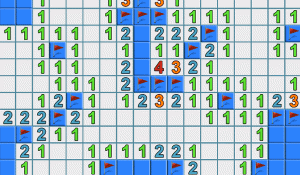
Tile Sweep Deduction revolves around a straightforward yet deep principle. Each revealed tile displays a digit that counts adjacent hidden elements. By cross-referencing these digits across the board, players identify safe zones and risky spots. This process demands careful observation and logical reasoning, as each new clue refines the overall picture. The game avoids random guessing, rewarding systematic thinking instead.
Board Generation and Variety
Every session begins with a freshly arranged grid, ensuring no two games feel identical. The random placement of hidden elements means players must adapt their strategy each time. This variety keeps the experience engaging, as familiar patterns rarely repeat. The grid size and density of hidden items can be adjusted, allowing for gradual progression from simpler layouts to more complex configurations.
Visual and Interface Design
The interface prioritizes clarity and ease of use. Tiles are clearly marked, and numbers are displayed in a legible font. Controls respond smoothly to both mouse clicks and touch inputs, making the game accessible on various devices. The design avoids unnecessary clutter, letting players focus entirely on the logical puzzle at hand. Color coding and subtle visual cues assist in quick recognition of tile states.
Progression and Difficulty Scaling
Players can select from multiple difficulty presets that alter the board dimensions and the proportion of hidden elements. Starting with a small grid helps newcomers grasp the fundamental logic without feeling overwhelmed. As confidence grows, larger boards with more hidden items present a steeper challenge. This scaling ensures that the game remains suitable for both beginners and seasoned puzzle enthusiasts.
Strategic Approaches
Effective play involves developing a systematic method. Many players begin by examining areas with low numbers, as these provide the most reliable information. Marking suspected dangerous tiles helps avoid accidental mistakes. Working outward from known safe zones gradually reveals the board. Patience is key, as hasty decisions often lead to setbacks. Over time, players build intuition for common patterns, improving both speed and accuracy.








Comments
0 comments