Number Merge Quest 2048
Reviews
Number Merge Quest 2048 strips the genre down to its essentials: a 4x4 grid, four directions, and merging pairs of equal tiles. The absence of a timer makes it a calm, methodical puzzle rather than a reflex test, and the random tile drops ensure no two sessions play out the same. Its main limitation is that the core loop is familiar to anyone who has tried a 2048-style game, so veterans may find the challenge comes from endurance and planning rather than novelty.
Description
How the Grid Works
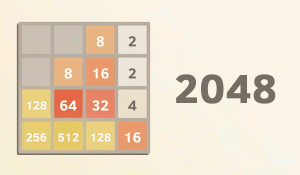
Every session begins on a 4x4 board holding a few numbered tiles. Swiping or pressing an arrow key slides every tile as far as it can go in that direction. When two tiles share the same number and collide, they fuse into one tile showing their sum: two 2s become a 4, two 4s become an 8, and the pattern continues upward. After each slide, the game places a fresh 2 or 4 in a random empty cell. That single rule shapes every decision, because the board only gets more crowded until you merge enough tiles to free space.
Planning Around Random Tiles
Random tile drops mean no two games unfold the same way, so strategy centers on damage control as much as ambition. A common approach is anchoring the largest tile in one corner, often the bottom-right, and building values toward it. Moves that scatter high tiles or open gaps you cannot refill tend to cause trouble later. Because each slide affects the whole board, a move that looks harmless can isolate a valuable tile or force an awkward direction next turn. Patience and reading the board matter more than speed.
Reaching 2048 and Beyond
The stated goal is creating a tile that reads 2048, but the game does not stop there. Players who clear that target often keep going to push their score higher, which turns the endgame into a test of how long you can preserve order on a shrinking grid. There is no timer, so the pace is entirely yours, whether you play a quick round or settle in for a longer attempt.
Presentation and Controls
The interface stays minimal. Numbers appear in a clean font on a soft background, and color gradients shift gradually as tile values rise, giving quiet feedback without pulling attention away from the grid. Arrow keys and touch swipes both work, so the same game plays comfortably on desktop and mobile. With no countdown or pressure mechanics, the experience suits short breaks and extended sessions alike.










Editorial Notes