Animal Tiles Matching Puzzle
Reviews
Animal Tiles Matching Puzzle sticks to a familiar swap-and-match loop but removes time pressure, shifting the challenge onto move limits and level objectives. Special tiles created by four- or five-tile matches add a layer of planning, and the gradual difficulty curve suits casual players, children, and older adults. The main limitation is that its mechanics stay close to genre conventions, so veterans may find it predictable.
Description
How Matching Works
Each move begins by selecting two adjacent tiles and swapping their positions. If the swap creates a horizontal or vertical line of three or more identical animal icons, those tiles disappear and points are awarded. The board then refills from above, which can trigger chain reactions that clear additional tiles without spending extra moves. That single loop—swap, match, refill—drives every level.
Objectives and Move Limits
Stages are defined by their goals rather than by timers. Common targets include reaching a set star count, removing every tile of a particular animal type, or clearing obstacles from the board. Because each level gives you a fixed number of moves, planning matters more than speed. Later stages introduce new tile patterns and demand more efficient swaps, but the difficulty rises gradually so newcomers can learn the basics without hitting a wall.
Special Tiles and Planning
Matching four or five tiles creates special pieces that can clear an entire row, a column, or nearby tiles. Knowing when to trigger one of these versus saving it for a tighter spot is a genuine strategic decision. Surveying the board before each swap often pays off, since one well-placed move can set up several future matches. That layer of foresight separates lucky clears from deliberate puzzle solving.
Presentation and Controls
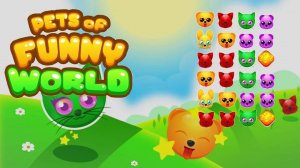
The artwork uses bright, cartoon-style animal characters with distinct colors and expressions, so tiles are easy to tell apart at a glance. Backgrounds change as you move through themed worlds, adding variety without cluttering the screen. Soft palettes and gentle animations keep the mood calm. Controls support both touch and mouse input, and the interface uses large, clearly labeled buttons with optional hints if you get stuck.










Editorial Notes