Urban Rotorcraft Pilot Adventure
Reviews
Urban Rotorcraft Pilot Adventure succeeds in delivering a focused flight experience. The controls feel responsive and reward careful input, while the city setting provides a visually engaging backdrop. Landing on moving platforms adds a layer of difficulty that keeps each mission fresh. The gradual difficulty curve ensures players build competence over time. It is a solid choice for anyone seeking a calm yet demanding aerial navigation game.
Description
Flight Dynamics and Controls
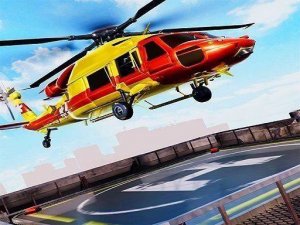
Urban Rotorcraft Pilot Adventure puts you in command of a detailed helicopter model. The control scheme emphasizes gradual adjustments to altitude and forward momentum. Players manage throttle, cyclic, and collective inputs through mouse or keyboard. The physics model simulates wind resistance and inertia, making each flight feel grounded in realistic principles. Early missions introduce basic hovering and straight-line travel, while later stages demand tighter maneuvers within narrow urban corridors.
Landing Zone Variety
Successful missions hinge on your ability to set down on diverse surfaces. Stationary rooftops offer stable targets, but moving platforms add a layer of complexity. Some landing pads sit atop rail cars or truck beds, requiring you to match speed and direction before touching down. Each landing zone has a specific size and approach angle, encouraging pilots to plan their descent carefully. Missing the mark may require a second attempt, so patience and practice pay off.
Cityscape and Environment
The urban setting presents a dense network of obstacles. Skyscrapers, communication towers, and bridges create a vertical maze that pilots must read and react to. Weather conditions may shift between missions, affecting visibility and handling. The city feels alive with traffic patterns and changing light, adding immersion without overwhelming the player. This environment rewards situational awareness and route planning over raw speed.
Progression and Mission Design
Missions are structured to gradually increase in complexity. Early tasks focus on basic navigation and stationary landings. As you advance, objectives incorporate time limits, tighter spaces, and multiple landing points. Completing a mission unlocks the next set of challenges, creating a natural difficulty curve. This progression keeps the experience engaging without becoming repetitive, as each new stage introduces a fresh combination of elements to master.








Comments
0 comments