Stellar Team: Alien Encounter
Reviews
Stellar Team: Alien Encounter prioritizes cooperation over confrontation. Its tool-swapping mechanic encourages creative problem-solving, while the pixel-art presentation and gentle difficulty curve make it approachable for younger players and nostalgic adults. The game is best suited for pairs who enjoy planning and precise timing, though solo play is supported. The main limitation is that the source material doesn't detail level count or specific tools, so depth beyond the core loop remains unclear.
Description
Cooperative Puzzle Platforming
Stellar Team: Alien Encounter is built around cooperation. Up to two players control a trio of heroes, each with a distinct look and feel. The shared goal is protecting the city from unusual cosmic visitors. Communication and planning become essential, especially in later stages where puzzles require precise timing. Whether playing alone or with a partner, coordinating movements and tool usage is the core of every action.
Tool-Based Problem Solving
Instead of direct confrontation, players rely on a variety of tools to clear paths and assist teammates. These items can be swapped during gameplay, allowing for creative solutions to each level's challenges. Some tools help reach high ledges, while others move heavy objects or activate mechanisms. The game rewards experimentation, as each stage may demand a different combination of tools and approaches. This design keeps the experience fresh and encourages repeated playthroughs.
Retro Visuals, Modern Feel
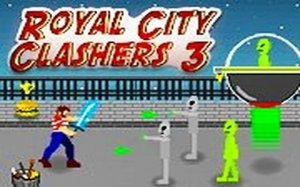
The pixel-art graphics evoke classic platformers from the 8-bit and 16-bit eras, with vibrant colors and charming character sprites. Backgrounds feature bustling cityscapes and alien landscapes that change as players progress. The visual style is family-friendly, with no dark or frightening elements. Animations are smooth, and the overall aesthetic creates a warm, inviting atmosphere that appeals to both nostalgic players and newcomers.
Level Progression and Difficulty
Stellar Team: Alien Encounter includes multiple stages that gradually increase in complexity. Early levels introduce basic movement and tool mechanics, while later stages combine multiple obstacles that require coordinated teamwork. The difficulty curve is gentle, making it accessible for younger players, but still offers enough challenge to keep experienced gamers engaged. Each stage ends when all characters reach the exit, reinforcing the cooperative nature of the adventure.
Accessible Controls for All Ages
The controls are straightforward, focusing on movement, jumping, and interacting with the environment. In two-player mode, each player uses a separate set of keys, making it easy for siblings or parents and children to play together. The simple control scheme allows players to focus on strategy and cooperation rather than complex button combinations. This design ensures that the game is welcoming to players of all skill levels.









Editorial Notes