Duo Key Quest: Cooperative Puzzle Adventure
Reviews
Duo Key Quest is a local two-player puzzle platformer about siblings searching a strange house for two keys per room. Its strength is the forced cooperation: doors open only when both characters stand nearby, so players must talk and move as a pair. Controls are simple, with WASD and arrow keys plus a double-jump. Rooms are brief and varied, making it a good fit for siblings, friends, or parents playing with children. The main limitation is that solo play is not the intended experience.
Description
Two Siblings, One Escape Route
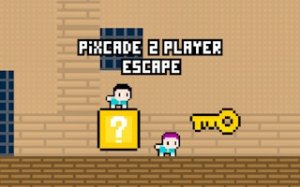
Duo Key Quest casts two players as siblings trapped inside a strange house. Each room hides two keys and a set of scattered coins. Finding both keys opens the way forward, while coins reward players who search thoroughly instead of rushing the exit. Because the house is built around paired actions, neither player can carry the room alone. [IMG_1]
Controls and Double-Jump Movement
Player one uses WASD and player two uses the arrow keys on the same keyboard. Both siblings can double-jump, which lets them reach raised platforms and clear gaps. The double-jump supports light platforming without turning the game into a precision test. Responsive inputs mean younger players can learn the basics quickly, and the shared keyboard setup keeps the experience local and immediate.
Cooperation as a Core Rule
Many doors and barriers only open when both characters stand near them. That single rule changes how every room is played: players must call out what they see, split small tasks, and regroup before moving on. The design prevents one person from solving a room alone, so each escape feels like a joint result. Patience and clear talk matter more than fast reflexes. [IMG_2]
Room Layouts and Session Pace
Each room has its own arrangement of obstacles, hiding spots, and coin placements, so the search stays fresh rather than repetitive. A typical room takes only a few minutes, which suits short family sessions or quick co-op breaks. The difficulty stays gentle, but the need to coordinate keeps older players engaged. It is a natural fit for siblings, friends, or parents playing with children.










Editorial Notes