Animal Puzzle Slide Challenge
Reviews
Animal Puzzle Slide Challenge keeps its scope narrow: slide tiles into an empty space until an animal picture is restored. The 3x3 and 3x4 grids give a clear difficulty step without overwhelming young players, and the lack of a timer removes the main source of frustration in puzzle games. Large tap targets and gentle audio suit its family audience. The trade-off is limited variety, as the input describes only animal illustrations and two grid sizes, so older or experienced puzzle players may find it too simple.
Description
What You Actually Do
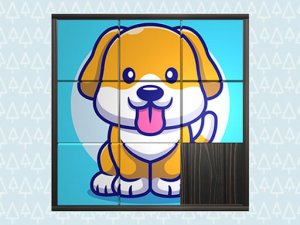
Animal Puzzle Slide Challenge is a sliding tile puzzle. Each picture starts scrambled, and one empty space sits somewhere on the grid. You click or tap a tile that borders that empty space, and it slides into the gap. Repeat that single action, one tile at a time, until every piece sits in its correct position and the animal illustration is restored. The empty space ends up in the bottom right corner when the puzzle is solved, and the game fills it automatically to complete the image.
Two Grid Sizes, One Core Mechanic
The game offers a 3x3 grid for beginners and a 3x4 grid for players who want a longer solve. The larger grid adds more tiles and more possible arrangements, which means more moves and more chances to disrupt progress you have already made. There is no timer, no move counter, and no penalty for taking a wrong turn. You can sit on a single puzzle for as long as you like.
Designed for Young Players
Every tile is large and easy to tap, which matters on tablets and phones where small hit targets frustrate young children. The artwork uses bright, colorful animal illustrations, and the sound effects stay gentle rather than loud or startling. Because the game runs directly in a web browser, there is nothing to download or install. The content is non-violent and free of inappropriate material, so parents can hand over a device without reviewing each puzzle first.
How to Solve Without Frustration
Start with the 3x3 grid to learn how tiles move. Then work on one row or one column at a time instead of trying to place every piece at once. Edge pieces are often easier to position early because they have fewer valid neighbors. If you get stuck, move tiles in a circular pattern around the empty space to create new arrangements. Regular practice builds pattern recognition, and the absence of a clock means speed is never the point.










Editorial Notes