Fruit Pair Memory Challenge
Reviews
Fruit Pair Memory Challenge keeps its scope narrow and executes it cleanly: flip tiles, remember fruit positions, clear the board. The absence of timers and penalties makes it welcoming for children, casual players, and anyone wanting low-stakes memory practice. Its main limitation is depth — the core loop stays the same across rounds, with difficulty coming only from more pairs. That focus is a strength for short breaks, but players seeking varied mechanics may find it repetitive over long sessions.
Description
How the Matching Works
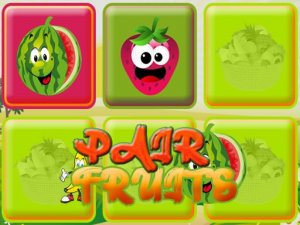
Each round presents a grid of face-down tiles, with every tile hiding a single piece of fruit. You turn over two tiles per move. If the fruits match, both stay face-up and you earn points; if they differ, the tiles flip back after a short pause. The objective is to clear the board by pairing every fruit, relying on your memory of where each one sits. There are no timers, so decisions can be deliberate rather than rushed.
Round Structure and Difficulty
Every new round brings a different arrangement and a larger number of pairs to find. That gradual increase is the main source of progression: early boards are quick to clear, while later layouts demand more careful tracking of positions. Because the layout changes each time, memorizing a fixed pattern won't help; you have to read the board in front of you. The game does not impose a time limit, so the challenge comes entirely from the growing number of pairs and your own recall.
Presentation and Feel
Cheerful fruit graphics make each tile easy to distinguish at a glance, and gentle audio feedback confirms matches without becoming distracting. The overall tone is calm rather than competitive, which suits short breaks as well as longer sessions. There is no penalty for a wrong guess beyond the tiles flipping back, so mistakes cost only the time it takes to try again. That design keeps the experience approachable for children and adults alike.
Approaches That Help
Focusing on a small section of the board at a time can make the grid feel less overwhelming. Even when a second tile doesn't match, noting its fruit and position builds a mental map you can use later. Recalling patterns from earlier rounds — the way pairs tend to be distributed, for instance — supports faster clearing as difficulty rises. Slower, deliberate play generally produces better recall than rapid guessing. Regular sessions give your visual memory repeated low-stakes practice.










Editorial Notes