Rush E Rhythm Challenge
Reviews
Rush E Rhythm Challenge targets fans of online animations and blocky-world visuals who want a simple rhythm test. Its strength is accessibility: four arrow keys, one song, and a health bar that punishes mistimed presses. The game does not offer a wide range of content or modes, so its appeal depends on replaying the same track to improve. Suitable for all ages, it rewards patience and rhythm awareness more than fast reflexes alone.
Description
Core Rhythm Mechanic
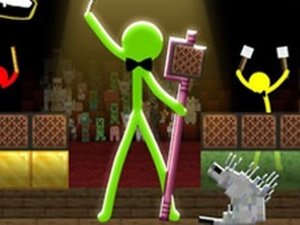
Rush E Rhythm Challenge is a fan-made music game that combines characters from popular online animations with a blocky, Minecraft-inspired backdrop. Players control stick figures and must press the correct arrow keys when matching symbols appear above their character. The game's central task is straightforward: hit the right key at the right moment. Missing a note—whether by pressing the wrong key, pressing nothing, or being too early or too late—drains the health bar. If health reaches zero, the song ends in failure.
Visual Style and Characters
The game leans on familiar imagery: stick figures and a blocky environment that references Minecraft. This visual choice gives the experience a recognizable, fan-oriented feel. Players can select from different stickmen characters, though the core interaction remains the same. The background and character design are meant to appeal to those who enjoy online animations and blocky-world aesthetics, but they do not alter the rhythm mechanics.
Skill Development and Accessibility
Because the controls are limited to arrow keys, the game is easy to pick up. Its challenge comes from timing and accuracy rather than complex inputs. The description notes that the game helps build eye-hand coordination, reaction time, and timing skills. It is suitable for all ages, but the later parts of the song require consistent practice to keep the health bar full. The difficulty curve is tied directly to the song's pacing and note patterns.
Practical Advice for Players
Success depends on listening to the music and anticipating note placement. Players who focus on rhythm rather than reacting to each symbol individually tend to maintain better accuracy. Memorizing arrow sequences helps during faster sections. Taking short breaks can prevent fatigue and preserve concentration. If the game offers a slower speed option, starting there and gradually increasing pace is a sensible way to build consistency.










Editorial Notes