Backrooms Rhythm Challenge
Reviews
Backrooms Rhythm Challenge keeps its scope tight: press the right arrow at the right moment, and avoid three consecutive misses. The fixed story order gives structure, while free play supports practice and song selection. Its open-source, family-friendly design lowers the barrier to entry, and the atmospheric setting distinguishes it from brighter rhythm titles. The main limitation is that the input describes only keyboard arrow input, so players wanting varied control schemes may find the options narrow.
Description
Timing Arrows in an Endless Space
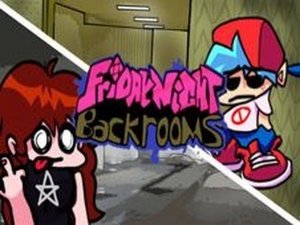
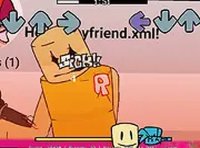
Backrooms Rhythm Challenge is a fan-made, open-source music game built around a single repeated action: pressing the correct arrow key when a floating arrow symbol reaches its target indicator. There are no combos to memorize or characters to upgrade. The challenge comes entirely from timing. Press early, late, or on the wrong key, and the input counts as a miss. Three consecutive misses end the current attempt, so a short lapse in focus can undo an otherwise clean run.
How Story Mode and Free Play Differ
The game splits its songs across two modes. Story mode presents a fixed song order, so players move through tracks in a set sequence and cannot skip ahead. Free play mode lets you pick any song you have unlocked, which makes it the natural place to repeat a difficult chart or warm up before returning to the story. Both modes use the same input system, so practice in free play transfers directly to story progress.
What the Backrooms Setting Adds
The mysterious, endless environment is not just decoration. It frames the game as a quiet test of concentration rather than a loud arcade spectacle. Upbeat music plays against an atmospheric backdrop, and the contrast keeps the mood light without turning the screen into visual noise. Clear arrow visuals and straightforward keyboard controls mean new players can start without a tutorial.
Who This Suits
Because sessions are short and the rules are simple, Backrooms Rhythm Challenge fits players who want a casual music game without a large time commitment. The open-source model means the project benefits from community support and regular updates. It is designed to be family-friendly and suitable for all ages. Anyone comfortable with a keyboard can pick it up, though steady rhythm and focus remain the real requirements for high scores.






Editorial Notes