Kart Jigsaw Puzzle Game
Reviews
Kart Jigsaw Puzzle Game keeps its scope tight: drag pieces, complete pictures, earn currency, unlock more. The three difficulty settings per image give it more replay value than a static puzzle collection, and the reward scaling encourages harder attempts without punishing casual play. Touch and mouse support means it works on most devices. The main limitation is variety; if you do not enjoy jigsaw mechanics, the progression system will not change your mind.
Description
Puzzle Solving with a Progression Twist
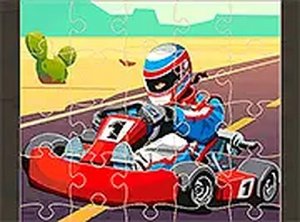
Kart Jigsaw Puzzle Game asks you to rebuild a scrambled image by moving pieces from a side panel onto the main board. The core loop is straightforward: study the original picture, then drag each piece to its matching spot. What sets it apart is the economy around that loop. You begin with a small starting amount that covers the cost of one picture. Completing that puzzle pays out a reward, which funds the next image. That cycle of solve, earn, and unlock gives each session a sense of forward motion rather than a one-off challenge.
Three Difficulty Tiers, Three Reward Levels
Every picture can be tackled in easy, medium, or hard mode. The difference is piece count: harder modes split the image into more fragments, which makes placement slower and more demanding. The trade-off is payout. Finishing a hard puzzle returns a larger reward than an easy one, so the game nudges you toward tougher boards without forcing them. You can replay any unlocked picture at a different difficulty if you want a lighter session or a bigger payout.
Controls and Platform Flexibility
Input is mouse or touch. You click and hold a piece, drag it across the board, and release it near its target area. On mobile, the same gesture works with a finger. A full-screen toggle removes browser clutter and makes the board easier to read on smaller screens. No download or account setup is required, so the game runs on any device with a modern browser.
Approaches That Reduce Frustration
Edge pieces are the most reliable starting point because they form a frame that narrows where interior pieces belong. Glancing at the original image before dragging helps you group pieces by color or region instead of testing them one by one. If a hard puzzle stalls, switching to medium on the same picture lets you finish the image and still collect a reward. Short sessions work well here; the game is designed to stay relaxing rather than punishing.









Editorial Notes